About the Journal
Founder
«A.K. Kussayinov Eurasian Humanities Institute» (EAGI), Astana, Republic of Kazakhstan.
Co-founders
«Universitas Muhammadiyah Sidoarjo» (UMSIDA), Sidoarjo, Republic of Indonesia.
«Universitas Widya Gama Mahakam Samarinda» (UWIGAMA), Samarinda, Republic of Indonesia.
Policies
Aim and Scope
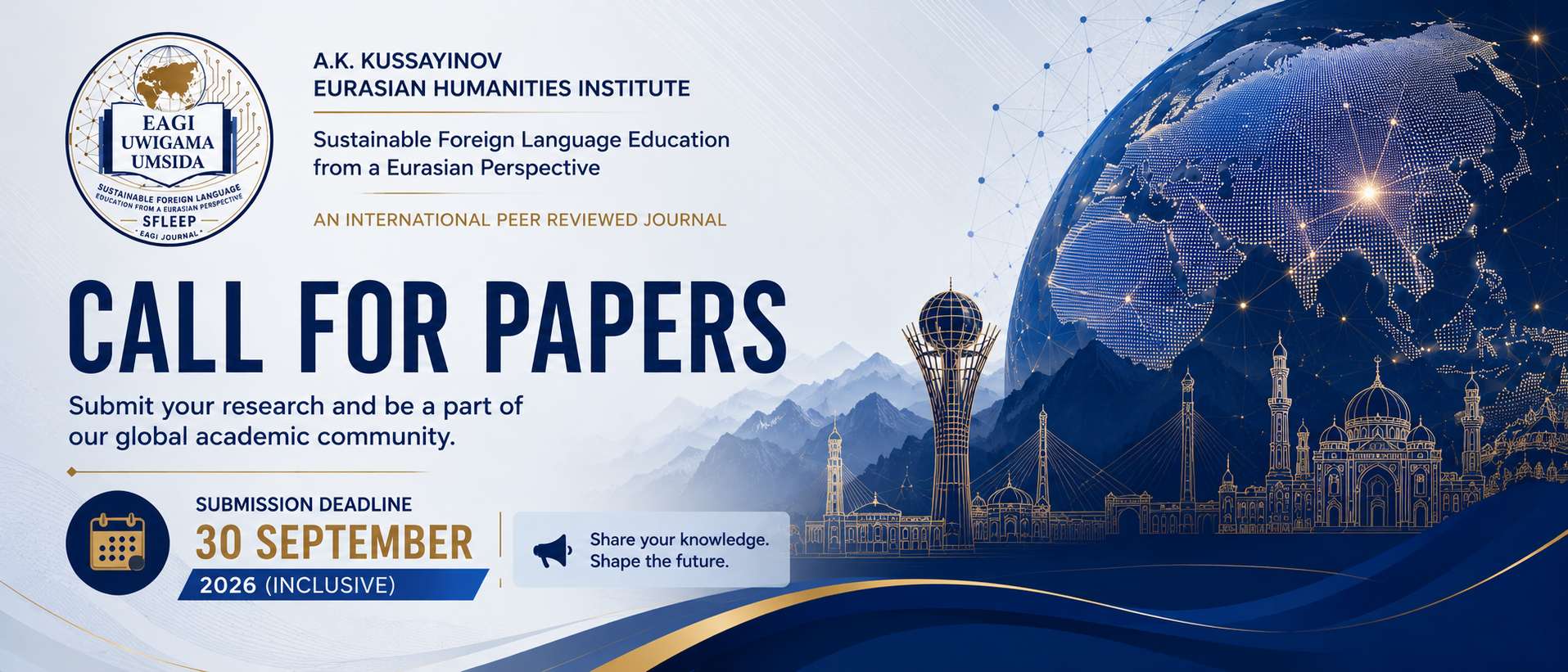
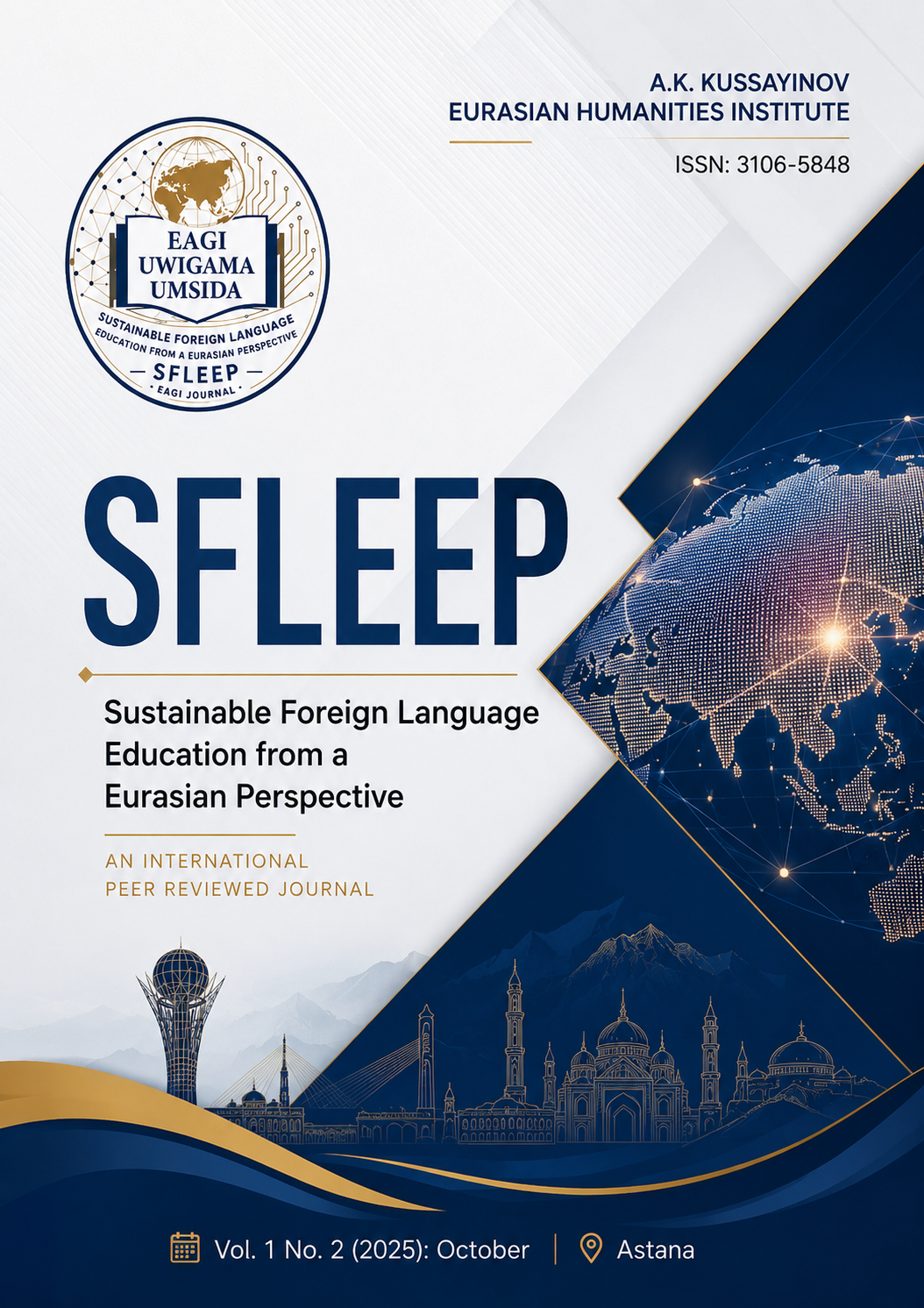
Sustainable Foreign Language Education from Eurasian Perspective (SFLEEP) is a peer-reviewed, multilingual academic journal (Kazakh, English, and Russian) that focuses on contemporary issues in foreign language education, applied linguistics, and cross-cultural communication from a Eurasian perspective. The journal publishes empirical research articles and literature reviews addressing sustainable approaches to language teaching and learning. The journal is published quarterly in an electronic format, with issues released in October, January, April, and June.
The journal has been developed in alignment with the State Order issued by the Ministry of Higher Education and Science of the Republic of Kazakhstan and in adherence to the A.K. Kussayinov Eurasian Humanities Institute (EAGI) policy on scientific publications.
The journal aims to address critical issues in foreign language education and applied linguistics; foster the exchange of fundamental and applied research findings; promote integration into the global academic community; and advance the quality of language education and research in the Eurasian region.
The scope and scholarly focus of the journal encompasses the following areas:
- Investigate sustainable practices in language education from Eurasian perspective
- Explore the intersection of language education with environmental, social, and cultural sustainability
- Analyze policies and reforms shaping foreign language teaching from Eurasian perspective
- Present case studies, comparative analyses, or longitudinal research with a Eurasian focus
- Promote multilingualism, intercultural dialogue, and global citizenship through language learning
- Address the role of digital transformation and AI in fostering sustainable language education
- Theorize sustainability in foreign language education from sociolinguistic, political, or economic perspectives
- Sustainable language education policies and frameworks
- Digital transformation and AI in language education
- Curriculum internationalization and intercultural competence
- Multilingualism and minority language preservation
- Teacher training for sustainable foreign language instruction
- Cross-border educational cooperation from Eurasian perspective
- Language education for global citizenship and SDGs
- Assessment practices aligned with sustainable learning goals
- Regional perspectives on English and other foreign language teaching
- Sustainable methodologies and curriculum development in foreign language teaching
- Innovations in language learning and learner autonomy in higher education
- The role of digital technologies, AI, and blended learning in language education
- Assessment and evaluation practices that support long-term language development
- Intercultural competence, multilingualism, and global citizenship in language education
- Comparative and cross-national studies of language education policy in Eurasian contexts
- Sustainability in translation and interpreting education and professional training
- Ethics, equity, and inclusion in language and translation studies
- Language teacher education and professional development in higher education
- Case studies on institutional reforms and strategic planning for sustainable language programs
- Advancing Sustainable Development in Social Sciences and Humanities Education amid the Modernisation of Higher Education in Eurasia: Citizenship, Historical Memory, and National Identity
Current Issue
Vol. 1 No. 1 (2026): October
Published:
2026-10-01